Reuse is not recycling
Using the right words is not a matter of style. It is a professional responsibility.
| Topic | Regulation · Professional practice |
| Legislation | Spanish Law 7/2022 · Directive 2008/98/EC |
Reuse and recycling appear together in plans, tender documents and headlines, as if they were synonyms. But they describe different operations, with different consequences for the material and the project.
Telling them apart is not a matter of words: it determines what is decided before a demolition and what can be used again.
Recycling is better than throwing away, but it comes too late: it destroys the form, the labour and much of the energy embodied in the material.
Reuse
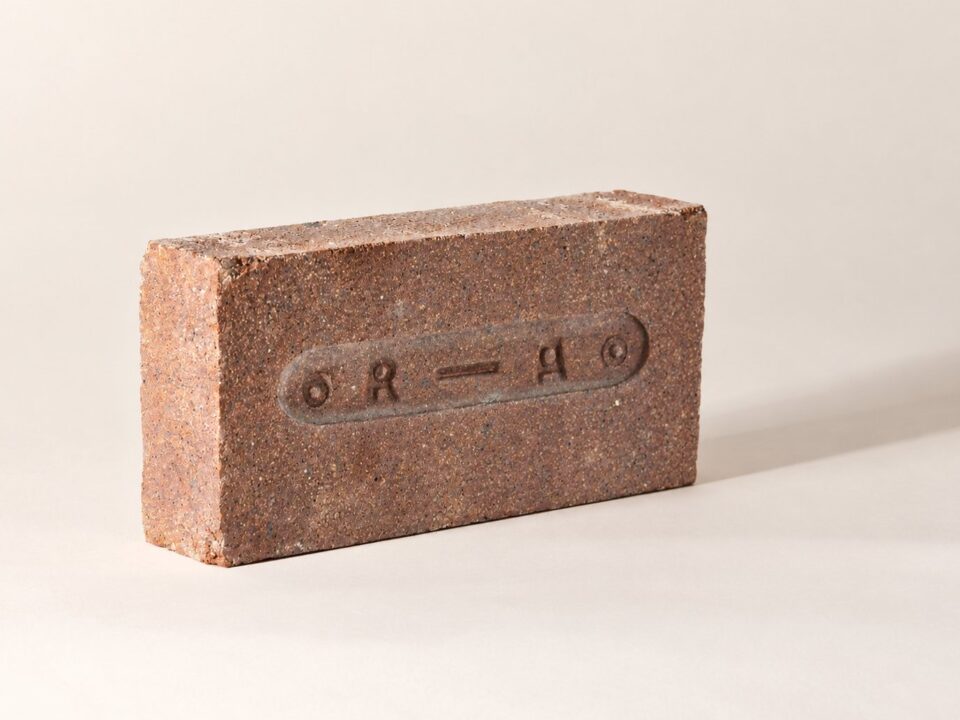
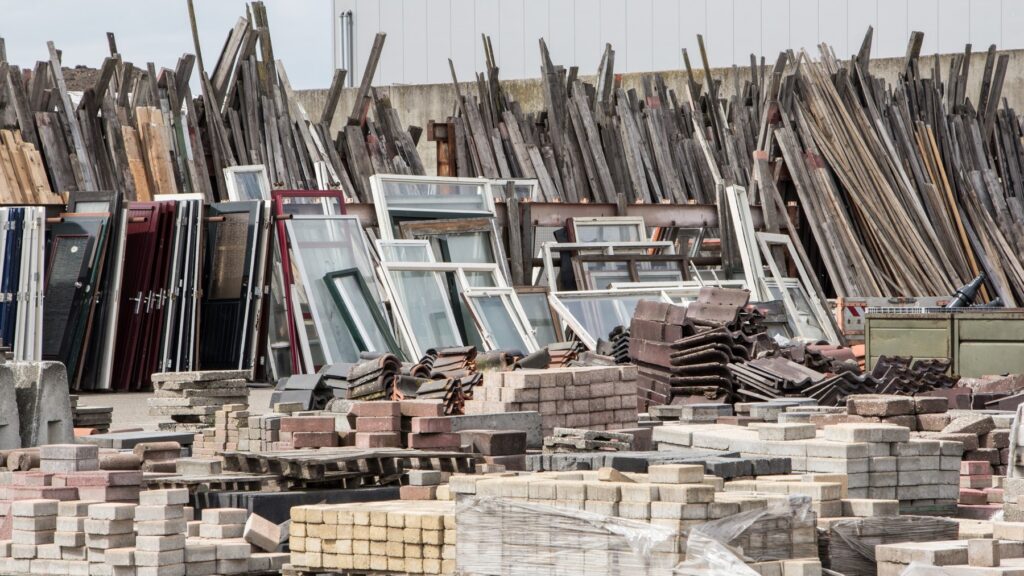
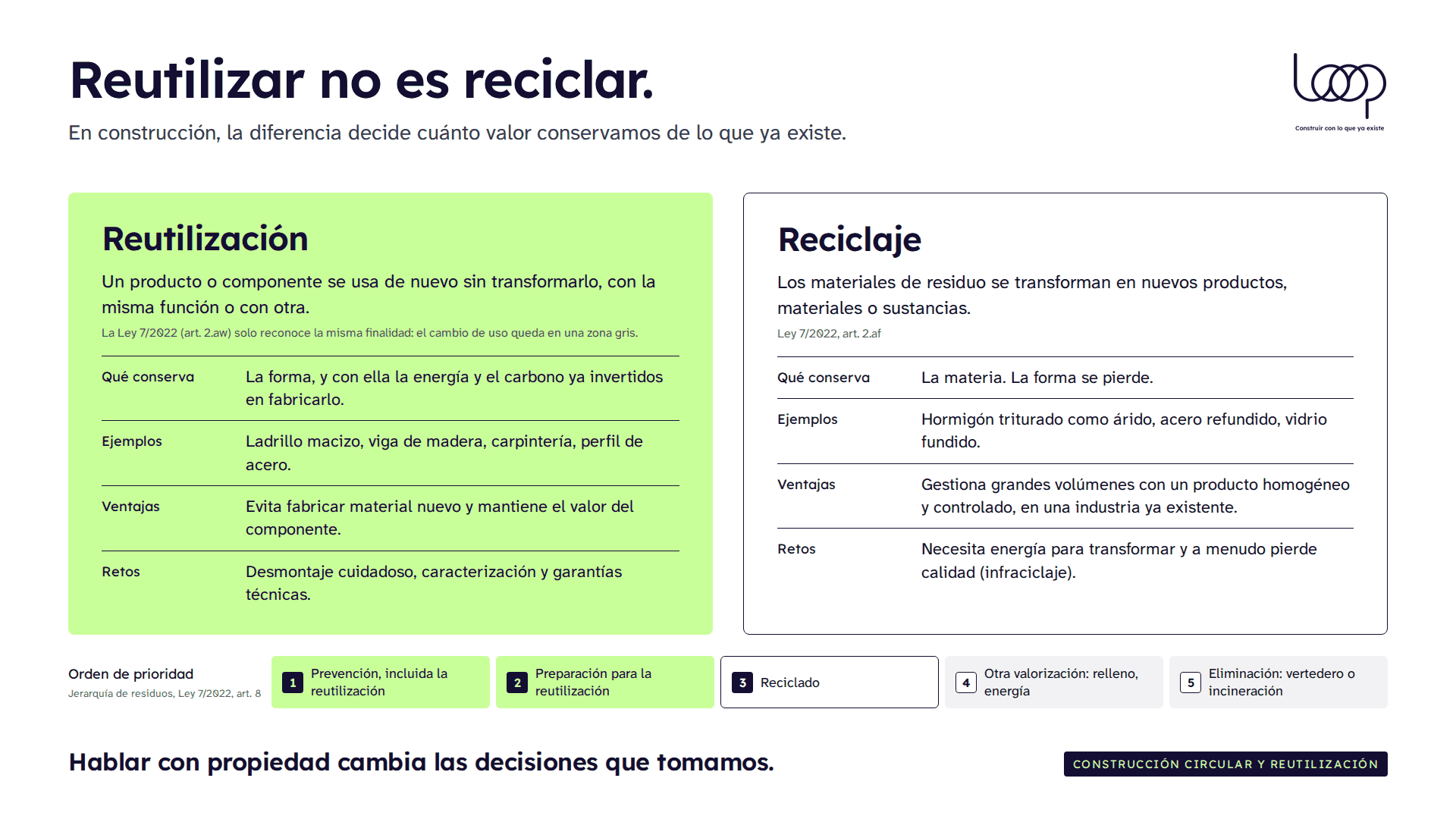
Recovering materials and components that would otherwise end up as waste —from existing buildings or buildings being deconstructed, from industrial surplus and offcuts, or from stock that was never used— characterising and validating them, and putting them to use without losing their technical identity, in their original function or another.
Recycling
Turning waste into new products, materials or substances, for the same purpose or another: crushing concrete into aggregate, melting steel. The material loses its original form and function, and the industrial processing uses more energy and adds environmental impact.
What the law says
Spanish law defines reuse as the use of products or components “that are not waste” for the same purpose for which they were conceived, and recycling as a waste recovery operation (Law 7/2022, art. 2). The waste hierarchy places prevention —which includes reuse— ahead of recycling (art. 8; Directive 2008/98/EC, art. 4).
Why it matters in a demolition
When a demolition is announced as “90% recycled”, it often refers to crushed aggregate. It is a good figure for waste management. It is not reuse.
What is decided before demolition determines what can be used again. If a material or component is torn out carelessly and declared waste, its path is recycling or landfill. If it is identified beforehand, dismantled and documented, it can begin a new life.