What is a pre-demolition audit
How can we reuse what is already built if we do not know what we have?
| Topic | Tools · Regulation |
| Format | 12-page guide (PDF) |
| Sources | DIN SPEC 91484:2023 · each country’s regulations (2026) · FCRBE guide (Interreg NWE, 2022) |
What it is. A first detailed record of a building’s materials and components before a major intervention. It tells you what is there before demolition, analyses the circularity potential of existing materials, makes the material value of the building visible to everyone involved and activates the circular market.
It does not only help reuse. Characterising materials properly also allows them to be recycled while keeping more value, because we start not from undifferentiated waste but from a known, characterised material.
Timing changes everything
If the audit comes after the design, it only helps manage waste. If it comes before, it changes the design.
Before deciding to demolish
It helps conserve.
During design
It works as a catalogue of materials to design with.
Just before demolition
All that is left is to optimise recycling.
Stages according to DIN SPEC 91484:2023.[1]
How to carry it out
The earlier the audit starts, the more time there is to find a destination for the materials and components.
Who can carry it out
Architects, owners, contractors, demolition and deconstruction companies, technical inspection bodies, reclaimed material dealers and reuse experts. Each sees different things.[3]
The guide recommends combining them according to the project’s goals: material dealers spot what already has a market; a reuse expert also sees the less common opportunities.
From visual scan to detailed inventory
First, a visual scan as soon as we know we want to intervene in an existing building or built environment. Then, a more general pre-audit listing each material or component with a photo, quantity, dimensions, notes and possible destinations.[3]
If there is potential, a complementary audit inspects those materials and components in depth, documents dismantling trials and prepares a sheet per batch to communicate it.
A waste audit is not a reuse audit
A waste audit is organised by European Waste Catalogue codes, by material. A window counts as a certain amount of glass and a certain amount of timber. In a reuse audit, the same whole window counts as a single component.[3]
Combining them is feasible if these differences are taken into account and the team has reuse experience.
How to spot the potential
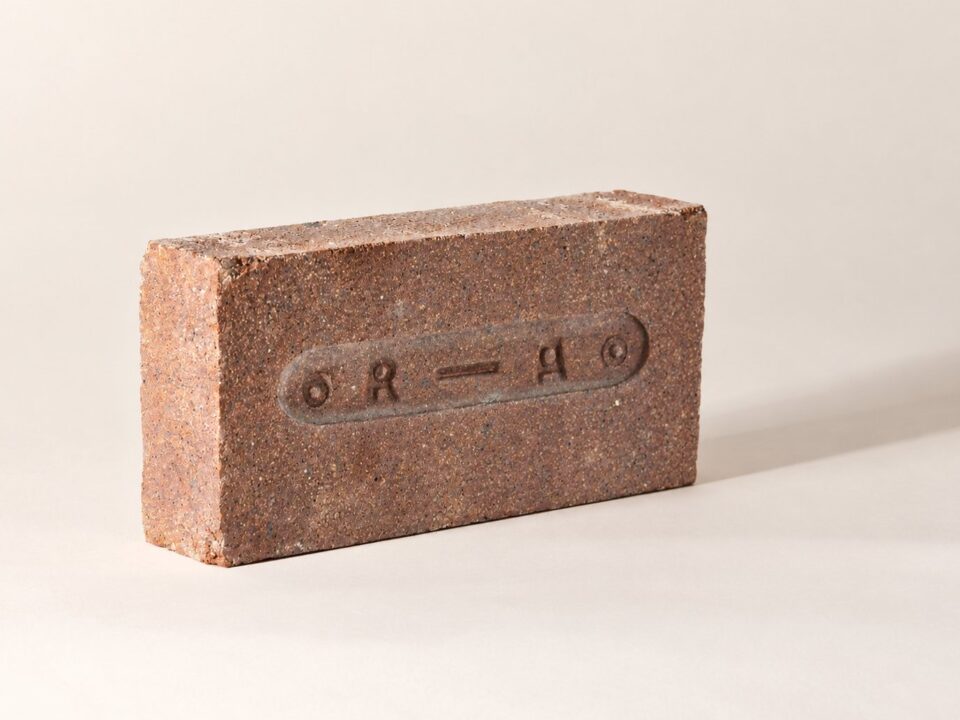
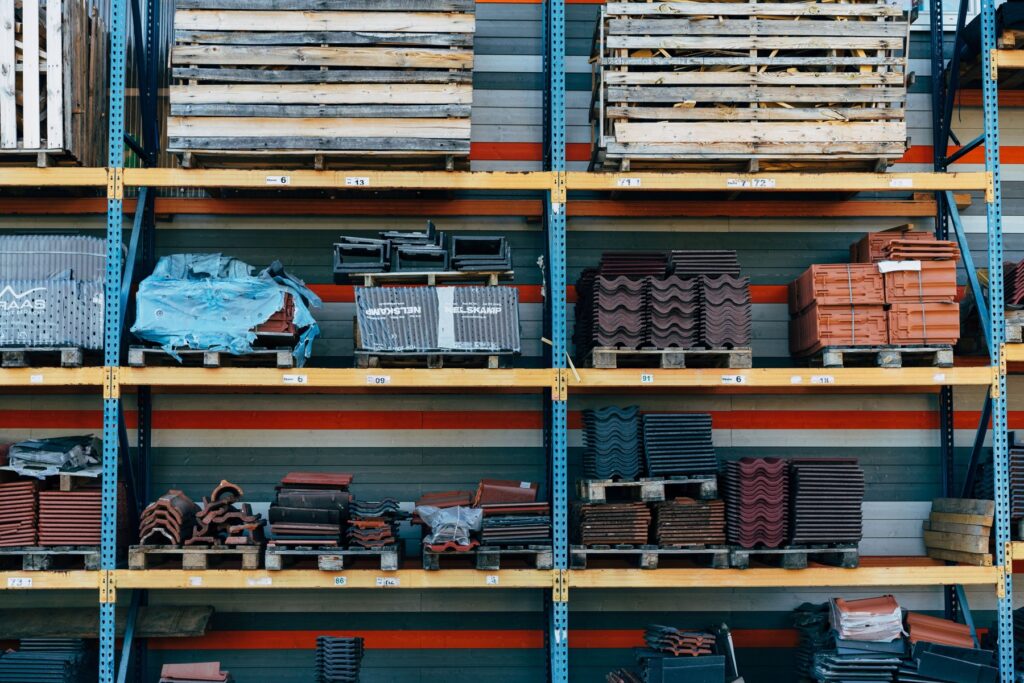
By analogy with what is already commonly reclaimed: solid brick, roof tiles, timber, parquet, floor tiles, structural steel, doors, cast-iron radiators, sanitaryware, stone.[3]
And with criteria: condition, quantity, homogeneity, value, ease of dismantling and logistics, carbon savings and hazardous substances. No dismantling or destructive testing before assessing the presence of asbestos.[3]
What to do with the inventory
Tell the demolition company which materials and components are to be recovered before demolition starts, and share the inventory with the new project team so they can be reused on the same site or another.[3] The key is for this information to reach the design stage: that is where the project can incorporate the materials and achieve the intended impacts and targets.
For public works, the guide suggests attaching it to the demolition contract, with a best-efforts obligation to dismantle carefully and find a destination for the materials and components, or using it as the basis for a dismantling tender.[3] For us, the inventory must be part of the competition brief, so that existing materials and components are a design condition from the outset, not something dealt with afterwards.
The guide
In 2022 the European project FCRBE (Interreg North-West Europe) published The reclamation audit, a guide to inventorying reusable products before demolition. It notes that less than 1% of materials leaving construction and demolition sites as waste is reused today, and that reuse can have an impact 2 to 12 times lower than using an equivalent new product.[3]
In English, French and Dutch, with an Excel inventory template.
Regulatory map
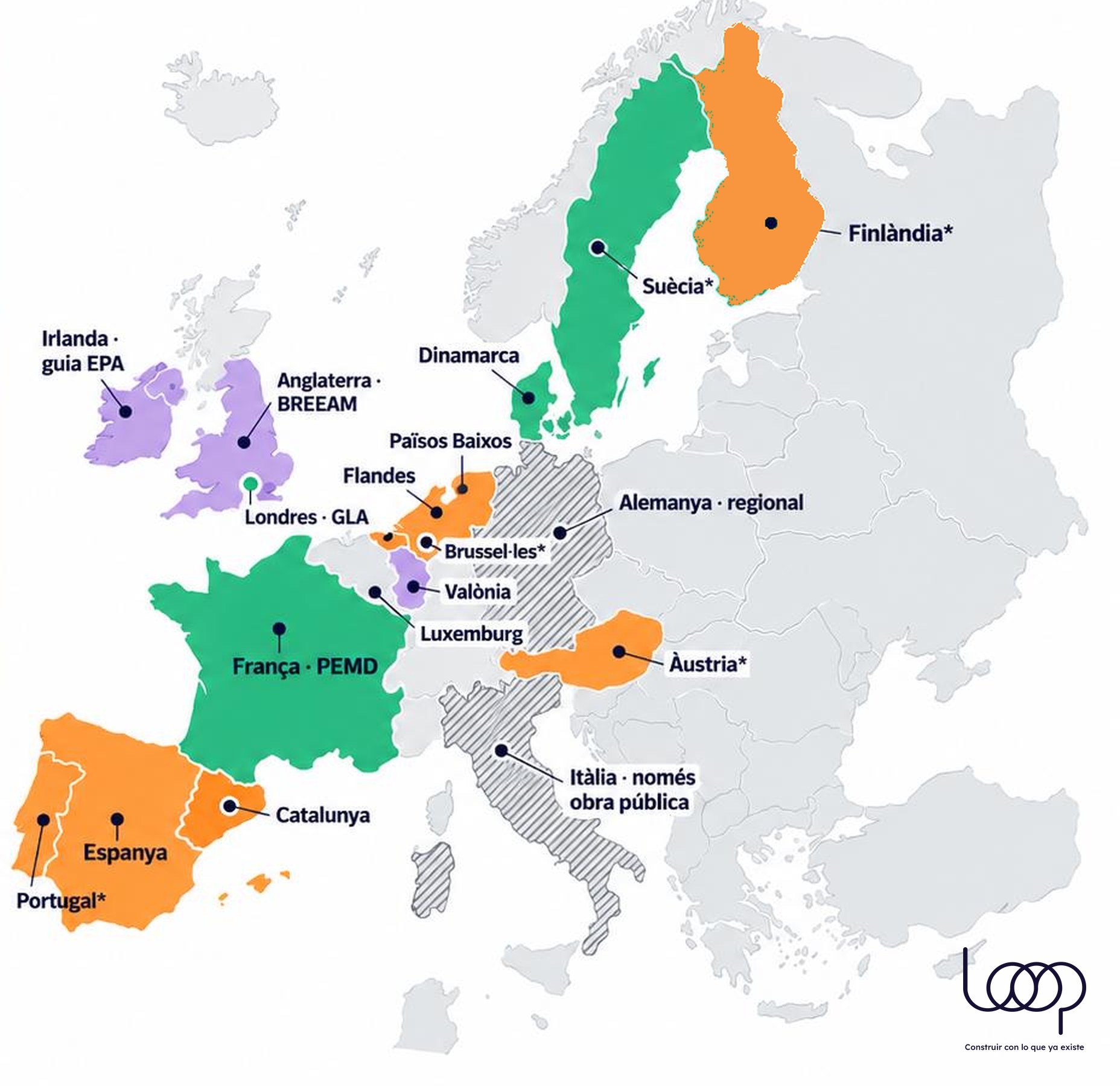
Pre-demolition audits in Europe: mandatory in some countries, absent or reduced to a waste plan in others.
Mandatory and reuse-oriented
France (PEMD, 2023), Denmark (2025), Luxembourg (2022), Sweden and London (GLA, 2021).
Partial obligation
Italy, public works only (CAM 2022); Germany, depending on the region.
Voluntary or through certification
England (BREEAM), Ireland (EPA guidance) and Wallonia.
Waste plan or inventory, not a resource audit
Spain, Catalonia, Portugal, Flanders, Brussels, the Netherlands, Austria and Finland.
No specific obligation found in the other countries (grey).
* Mixed cases: they combine a waste approach with the identification of reusable materials and components.
Source: LOOP’s own analysis of each country’s regulations (2026).[2]